
Ghanaians were buying crypto long before there was a law for it, mostly on P2P desks paid with MTN MoMo. Since late December 2025 there is a law, the Virtual Asset Service Providers Act, 2025 (Act 1154). What there is not, yet, is a single licensed exchange. So when you set out to buy crypto in Ghana, you are choosing between foreign exchanges, P2P marketplaces and a handful of cedi apps and local brokers, none of which holds a Ghanaian licence.
This page puts the practical answers in one place: which routes work with cedis, what they cost, where people lose money, and how we rank the best crypto exchanges in Ghana. Figures in the text come from our 20 November 2026 snapshot. The converter at the top and the price table further down update live.
Three ways Ghanaians buy crypto with cedis
Strip away the marketing and there are only three doors. Which one suits you depends mostly on what you pay with and how much you are buying.
| Route | You pay with | What it costs | Main risk |
|---|---|---|---|
| Card on a global exchange | Ghanaian Visa or Mastercard | Card fee plus spread | Your bank declines the payment |
| P2P marketplace | MoMo, Telecel Cash, AT Money, bank | Price above the BoG rate | Reversal and third-party payment scams |
| Cedi app or local broker | MoMo or bank transfer | Spread built into the quote | Quote drifts from the live rate |
A card purchase is the simplest if your bank allows it, because you never deal with a stranger. P2P is how most cedis turn into USDT, since it takes mobile money and works for amounts as small as GH¢100. Cedi apps sit in between: Blockchain.com added the cedi on 13 March 2026 with MoMo deposits from about GH¢50, and Ghanaian broker Mybitstore lists all three mobile money networks.
Whatever you pick, start small. Buy GH¢200 of USDT, send it to your own wallet, sell a little back, and only then move bigger sums. You learn where the fees hide for the price of a data bundle.
Top 10 crypto exchanges for Ghana compared
The table below ranks the platforms we think are most useful for someone in Ghana, from card-friendly global exchanges to cedi brokers. Read the payment and cedi columns first: they decide whether a platform fits you more than any brand name does.
| # | Exchange | How you pay | Cedis | Regulatory status | Links |
|---|---|---|---|---|---|
| 01 |  CEX.IO | Visa / Mastercard | No cedi wallet | US FinCEN MSB · UK FCA reg. | Create Free Account Read review |
| 02 |  Binance | P2P: MoMo, Telecel Cash, banks | GHS on P2P | No Ghana licence | binance.com ↗ Read review |
| 03 |  Bybit | P2P: MoMo, Telecel Cash | GHS on P2P | No Ghana licence | bybit.com ↗ |
| 04 |  Blockchain.com | MoMo deposits | Cedi wallet | No Ghana licence | blockchain.com ↗ |
| 05 |  OKX | Crypto deposits | Not verified | No Ghana licence | okx.com ↗ |
| 06 |  KuCoin | P2P: MoMo, Telecel, banks | GHS pages | No Ghana licence | kucoin.com ↗ |
| 07 |  Mybitstore | MTN MoMo, Telecel, AT, banks | Cedis direct | Ghanaian company, no licence | mybitstore.com ↗ |
| 08 |  Busha | Not verified for GH | Not verified | GH company registered; licence is Nigerian | busha.io ↗ |
| 09 |  Bitget | Crypto deposits | Not verified | No Ghana licence | bitget.com ↗ |
| 10 |  Remitano | P2P escrow | Not verified | No Ghana licence | remitano.com ↗ |
-
- Pay with
- Visa / Mastercard
- Cedis
- No cedi wallet
- Status
- US FinCEN MSB · UK FCA reg.
-
- Pay with
- P2P: MoMo, Telecel Cash, banks
- Cedis
- GHS on P2P
- Status
- No Ghana licence
-
- Pay with
- P2P: MoMo, Telecel Cash
- Cedis
- GHS on P2P
- Status
- No Ghana licence
-
- Pay with
- MoMo deposits
- Cedis
- Cedi wallet
- Status
- No Ghana licence
-
- Pay with
- Crypto deposits
- Cedis
- Not verified
- Status
- No Ghana licence
-
- Pay with
- P2P: MoMo, Telecel, banks
- Cedis
- GHS pages
- Status
- No Ghana licence
-
- Pay with
- MTN MoMo, Telecel, AT, banks
- Cedis
- Cedis direct
- Status
- Ghanaian company, no licence
-
- Pay with
- Not verified for GH
- Cedis
- Not verified
- Status
- GH company registered; licence is Nigerian
-
- Pay with
- Crypto deposits
- Cedis
- Not verified
- Status
- No Ghana licence
-
- Pay with
- P2P escrow
- Cedis
- Not verified
- Status
- No Ghana licence
Checked 20 November 2026. No exchange holds a full Ghanaian VASP licence yet; licensing under Act 1154 had not started.
Two names you may expect are missing. Paxful, once the default P2P site in Ghana, shut down on 1 November 2025. Yellow Card closed its retail app on 1 January 2026 and now serves businesses; its Ghana entity sits in the SEC sandbox as an exchange, but you cannot buy through it as an individual. And one rule applies to every row: no platform has a full Ghanaian licence, because none has been issued.
Why our first pick ranks first, and what it lacks
CEX.IO tops the list because it does one thing many rivals cannot from Ghana: it takes a Ghanaian Visa or Mastercard directly. Ghana is not on its list of unsupported countries, nor on the lists of countries where card payments are switched off, as we checked in November 2026. Users here contract with CEX OVRS LLC, registered in Nevis.
Its paperwork abroad is concrete. The US arm is registered with FinCEN as a money services business (NMLS 1804170) and the UK arm is registered with the FCA for certain cryptoasset activities (FRN 1007192). The company has been operating since 2013, which is longer than most exchanges Ghanaians use.
The gaps matter just as much for a Ghanaian user.
+In your favour
- Accepts Visa and Mastercard issued in Ghana
- US FinCEN MSB (NMLS 1804170) and UK FCA registration (FRN 1007192)
- Operating since 2013
- Card fee 0.49% to 4.99% plus a service charge, shown before you pay
−Against you
- No cedi wallet: your card is charged in USD, EUR or GBP
- No MTN MoMo or Telecel Cash deposits
- No P2P desk, so cashing out to cedis means moving coins elsewhere
- New accounts limited to $1,000 a day and $3,000 a month by card for three months
- No Ghanaian licence, like every other platform here
Put simply, it suits someone with a working dollar-friendly card who wants to buy and hold. If you live on MoMo, or plan to sell back to cedis every week, a P2P platform will be part of your routine anyway. And your bank can still decline the charge, which is why we always suggest a small test payment first.
Paying with MTN MoMo, Telecel Cash and AT Money
Mobile money is how most Ghanaians pay for crypto, but almost never directly at a big exchange. You pay a P2P seller’s MoMo number, or a cedi app or broker that accepts MoMo. Binance has also offered one-click buying and selling with mobile money in Ghana since August 2024, through TransFi.
Your wallet tier sets the ceiling. The Bank of Ghana limits below have applied since 1 March 2024, and we found no later revision.
| Wallet tier | Daily limit | Monthly limit | Maximum balance |
|---|---|---|---|
| Minimum KYC | GH¢3,000 | GH¢10,000 | GH¢5,000 |
| Medium KYC | GH¢15,000 | No limit | GH¢40,000 |
| Enhanced KYC | GH¢25,000 | No limit | GH¢75,000 |
If you plan a GH¢6,000 purchase on a basic wallet, it will not go through in one day. Upgrade with your provider first. The 1% E-Levy on transfers was abolished from 2 April 2025, and in May 2026 the Bank of Ghana suspended MTN’s planned 0.75% wallet-to-bank fee. Transfer fees still vary by amount and network, so check the charge on your confirmation screen before you approve.
Names have changed too. Telecel Cash is the old Vodafone Cash, and AT Money is the old AirtelTigo Money; many P2P ads still use the old labels. Our full guide to buying crypto with mobile money covers each network’s quirks.
P2P trading in cedis and how escrow protects you
On a P2P marketplace you trade with another person, and the platform acts as referee. The protection comes from escrow: when you open an order, the seller’s coins are locked by the platform and only released when the seller confirms your payment.
-
Pick an ad
Choose a seller with a long completed-order history who accepts your MoMo network, and check their limits match your amount. -
Open the order
The seller’s USDT is locked in escrow, and a payment timer starts. -
Pay from your own wallet
Send the exact cedi amount from a MoMo number registered in your own name to the number shown in the order. -
Mark as paid and wait
The seller checks their balance and releases the coins to your platform wallet. If they do not, open an appeal before the timer runs out.
Selling is where Ghanaians get burned. The classic trick is the reversal scam: a buyer sends a fake payment SMS, or pays and then asks the network to reverse the transfer as a mistake. Release your USDT only when the cedis appear in your real MoMo balance, never because a text message says so. Refuse payments from a name that does not match the buyer’s verified account.
A worked example: sell 400 USDT at GH¢12.38, the best buy offer on Bybit when we checked, and about GH¢4,952 should land in your wallet. On a minimum-KYC wallet with a GH¢5,000 balance cap, that nearly fills it, so empty the wallet first or upgrade.
Live cedi prices and the P2P premium
These are live cedi prices for the coins most people in Ghana start with. They are market reference prices, so what you pay on a card or P2P will be a little higher.
- 01
 Tether USDT Dollar savings, P2P and remittances GH¢11.78 +0.45%
- 02
 Bitcoin BTC Long-term holding GH¢727,355 -3.04%
- 03
 Ethereum ETH Apps and tokens on Ethereum GH¢20,609 -2.89%
- 04
 Solana SOL Low-fee transfers and apps GH¢847.86 -3.36%
- 05
 BNB BNB Binance ecosystem fees GH¢6,716 -3.44%
- 06
 USD Coin USDC Second dollar stablecoin GH¢11.78 +0.47%
Prices from CoinGecko
Three different cedi prices for a dollar existed on the same day in mid-November. The Bank of Ghana interbank selling rate was GH¢11.79 on 19 November. The best Bybit P2P offer to sell you a USDT was GH¢12.39. Forex bureaus were selling dollars at GH¢12.45. The gap between the official rate and what you pay on P2P is the P2P premium, about 5% that day.
What does 5% mean for your money? GH¢1,000 buys about 80.7 USDT at GH¢12.39, against 84.8 at the interbank rate. You cannot buy at the interbank rate as an individual, so the fairer comparison is the forex bureau, and P2P was slightly cheaper than that. The premium moves with dollar demand: the cedi gained about 41% against the dollar in 2025, then lost 10.6% in 2026 to mid-November.
The second cost is the spread, the gap between the buy and sell price on the same platform. On Bybit it was a single pesewa that morning, which is tight. Instant-buy buttons in apps usually carry a wider spread hidden in the quote.
Is crypto legal in Ghana? The VASP Act in plain English
Yes. Crypto is legal to hold and trade in Ghana, and it is not legal tender; only the cedi is. The rules changed fast over two years.
-
Jul 2025
BoG registration exercise
More than 100 crypto firms registered with the Bank of Ghana. Registration is not a licence.
-
19 Dec 2025
Parliament passes the VASP Bill
The President assented in late December, creating Act 1154.
-
Jan to Aug 2026
Sandboxes open
Six firms enter the BoG sandbox; the SEC sandbox grows to 20 firms.
-
20 Feb 2026
Advertising stopped
BoG and SEC order crypto firms to take down billboards and mass marketing.
-
Jun 2026
Fiat wallet directive
Banks and MoMo issuers must stop servicing unauthorised USD wallets run by crypto platforms.
-
25 Aug 2026
Coordinating committee inaugurated
Full operationalisation of the Act targeted for 2027.
The Act splits the work. The Bank of Ghana covers payments, stablecoins and settlement through its Virtual Assets Regulatory Office. The Securities and Exchange Commission covers exchanges, brokerage, custody and token issuance. Riskier activities will need a licence, lighter ones a registration.
The June 2026 directive is often misread as a ban. It was reported as targeting dollar wallets run by crypto platforms, not crypto trading itself. Our crypto regulation guide goes through every notice and what it means for you.
Banks, cards and the Ghana Card
None of the big Ghanaian banks (GCB, Ecobank, Stanbic, Fidelity, Absa) has published a position on crypto that we could find. What is on record is less encouraging. In January 2023, First National Bank Ghana blocked its Visa debit cards for Binance.com, and GTBank Ghana debited customers who had traded crypto for the difference between platform and official exchange rates. Since June 2026, every bank and MoMo issuer has been under the BoG order on crypto-linked dollar wallets.
For you, that means a card payment to an exchange can fail even when the exchange accepts Ghanaian cards. Try a small amount first, and ask your bank whether international online payments are enabled on your card.
Identity is the other gate. Every serious platform runs KYC (identity checks required by anti-money-laundering rules). The Ghana Card has been the sole ID for financial transactions since a 2022 BoG notice, your SIM and MoMo wallet are linked to it, and biometric verification became mandatory in 2026 under L.I. 2523. International exchanges may also take a passport. Upload ID documents only inside the official app or website, never to someone who messages you offering to verify your account.
Where to buy in Accra, Kumasi, Tamale, Takoradi and Cape Coast
Buying crypto is done on your phone, so the platforms work the same in Bolgatanga as in Osu. What differs between cities is the community around you, and the scams that target it. There are no licensed crypto shops anywhere in Ghana, so anyone offering to buy coins for you in person is just a P2P trader without the escrow.
Accra hosts the regulators (the BoG, the SEC and the Virtual Assets Regulatory Office), the Accra Stablecoin Conference held at the Kempinski in July 2026, and BitDevs meetups at Legon. Kumasi has the Built With Bitcoin Foundation’s training hub in Ejisu, opened in December 2022, and a large student population at KNUST. Tamale’s crypto scene is small; the only meetup we could confirm was a Cardano Ghana event. The Western Region around Takoradi saw the 2022 eCedi pilot in Tarkwa and Sefwi Asafo, and Cape Coast hosted a Tether and Bitnob campus tour in May 2024. Tap a city on the map for its own guide.
The coins Ghanaians tend to start with
There is no official breakdown of which coins Ghanaians hold, so we go by what the cedi markets trade. Almost every cedi P2P ad is for USDT, a stablecoin that tracks the US dollar. People use it to hold dollar value without a dollar account, to receive money from abroad and to move between platforms.
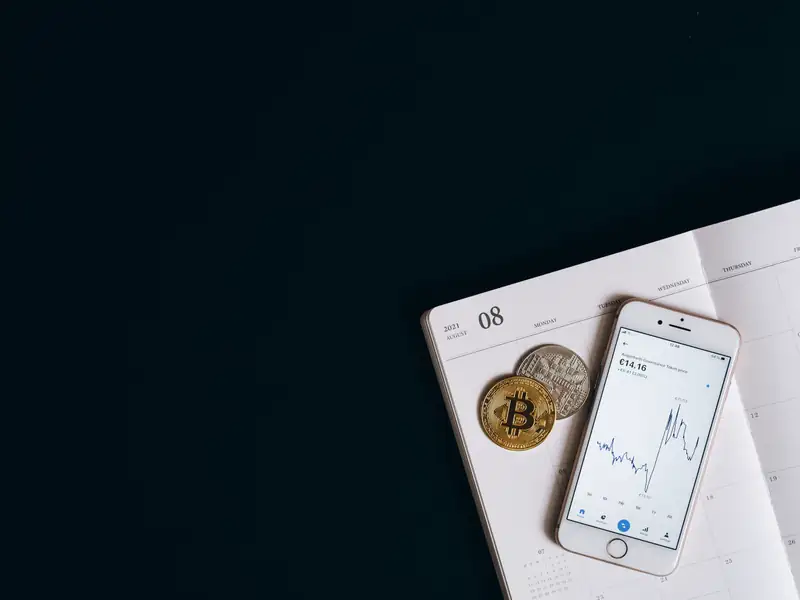
Bitcoin is the long-term holding most people mean when they say crypto, at around GH¢729,000 per coin on our snapshot day; you can buy a fraction, such as GH¢500 of it. Ethereum (around GH¢20,700), Solana and BNB follow, mostly for people using apps or paying fees on those networks.
The coin is only half the choice. USDT runs on several networks, and the sending and receiving network must match: TRC-20 (Tron) to TRC-20, BEP-20 (BNB Chain) to BEP-20. Send on the wrong one and the coins can be lost. Network fees also differ, which is why many Ghanaian P2P traders prefer TRC-20 or BEP-20 for small transfers.
Sending money home from the UK, US and Europe
Remittances are a big part of why Ghana uses crypto. Inflows reached about US$7.8bn in 2025, a record, and the BoG Governor has said some diaspora money now moves through crypto and stablecoin channels.
US$7.8bn
Remittances to Ghana in 2025
Bank of Ghana
4.63%
Average cost to send US$200 to Ghana
World Bank, Q3 2025
8.46%
Sub-Saharan Africa average
World Bank, Q3 2025
The crypto route works like this: your sister in London or your uncle in New York buys USDT, sends it to your wallet, and you sell it on P2P for cedis on MoMo. On the day we checked, P2P buyers were paying up to GH¢12.38 per USDT, close to the forex bureau rate. The costs are the card or bank fee abroad, the network fee and the P2P spread.
It is not always cheaper. Ghana is already one of the cheaper corridors at 4.63% on US$200, and apps that pay straight into MoMo spare your relatives the network-matching step. For an elderly parent without a smartphone, a regular money transfer app is simpler and safer.
Safety checklist before your first purchase
Most losses in Ghana come from scams, not from exchanges going bust. The SEC warned against YEPBIT Exchange and BonChat in July 2026, and the BoG and SEC together flagged a crypto scheme using a deepfake video of President Mahama. Anything promising a fixed daily return is a red flag, whatever its website says.
Before you send a single cedi
- Turn on app-based 2FA (an authenticator app), not SMS codes that a SIM swap can steal
- Write your seed phrase on paper and never type it into a website or share it with anyone
- Copy and paste addresses, then check the first and last characters
- Confirm the sending and receiving network match before you press send
- Send a small test amount before the full transfer
- On P2P, release coins only when the cedis show in your MoMo balance, not on an SMS
- Ignore anyone in a Telegram or WhatsApp group who offers guaranteed returns
If you keep coins on an exchange, the exchange holds them for you. For larger amounts you mean to keep for years, moving them to a wallet you control removes that dependence, but it also makes you fully responsible for your seed phrase.
How we rank exchanges
We score platforms on what matters to someone paying in cedis: whether they accept cedis, MoMo or Ghanaian cards; how identity checks work with a Ghana Card or passport; published fees and limits; regulatory status at home and abroad; the routes back to cedis; and how long they have operated without major incidents. We name the gaps in every row, because a platform that cannot take your MoMo is no use to you, however big it is.
CEX.IO holds the first position for its direct card access from Ghana and its registrations in the US and UK. The others follow by how well they cover cedi payments and withdrawals. We recheck fees, limits and regulatory news regularly and update the table when something changes.
Everything else on this site
Each guide below goes deeper into one part of the route, from coin pages and cedi converters to the full regulatory timeline and city guides.
Exchanges
Rankings and reviews for Ghana.
Buy & sell
MoMo, P2P, banks and cashing out.
Coins & rates
Live cedi prices and coin guides.
Law & safety
BoG, SEC, tax and scams.
Learn
Starter plan, data and terms.
Cities
Local guides with real local facts.
Frequently asked questions
What is the best crypto exchange in Ghana?
Is crypto legal in Ghana?
Can I buy crypto with MTN MoMo?
What is the quickest way to buy crypto with cedis?
Do I need a Ghana Card to buy crypto?
Why is USDT more expensive on P2P than the Bank of Ghana rate?
How do I sell crypto for cedis?
Do I pay tax on crypto in Ghana?
Sources we checked
- ↗Bank of Ghana — Virtual assets
- ↗Bank of Ghana — Press release on passage of the VASP Bill (22 Dec 2025)
- ↗US International Trade Administration — Ghana new virtual assets framework
- ↗Bank of Ghana and SEC — Notice on unauthorised advertising of virtual asset products (20 Feb 2026)
- ↗SEC Ghana — Full list of virtual asset sandbox participants
- ↗GNA — Ghana to fully operationalise virtual asset law by 2027
- ↗GNA — BoG orders banks to cut ties with crypto-linked USD wallets
- ↗CEX.IO — Limits and commissions
- ↗CEX.IO — Terms of use (CEX OVRS LLC)
- ↗CEX.IO — Unsupported countries and territories
- ↗FCA register — CEX.IO Markets UK (FRN 1007192)
- ↗Citi Newsroom — BoG increases mobile money limits from 1 March 2024
- ↗Bybit — P2P USDT/GHS marketplace
- ↗Modern Ghana — Cedi rates on 19 November 2026
- ↗Techpoint Africa — Binance one-click mobile money buy and sell
- ↗Pulse Ghana — Cedi now supported on Blockchain.com
- ↗MyJoyOnline — First National Bank and Binance card transactions
- ↗Citi Newsroom — Remittance inflows near US$7.8bn in 2025
- ↗MyJoyOnline — GRA to deploy technology to track crypto accounts
Risk note: crypto prices can fall sharply and you can lose all the money you put in. This page is general information, not financial, legal or tax advice. Fees, limits and rules change; check them with the provider, the Bank of Ghana and the SEC before you act.